
Good software does not replace good management — it makes it possible every single day, for every order and every item. That is why we implement software that works by the rules of the Theory of Constraints: it shows clear priorities, responds to actual consumption and directs attention where it produces the most result.
We work with established software partners from Israel, Japan and Germany, as well as with our own development for inventory replenishment. Depending on your situation we choose the solution that fits — not the other way round.
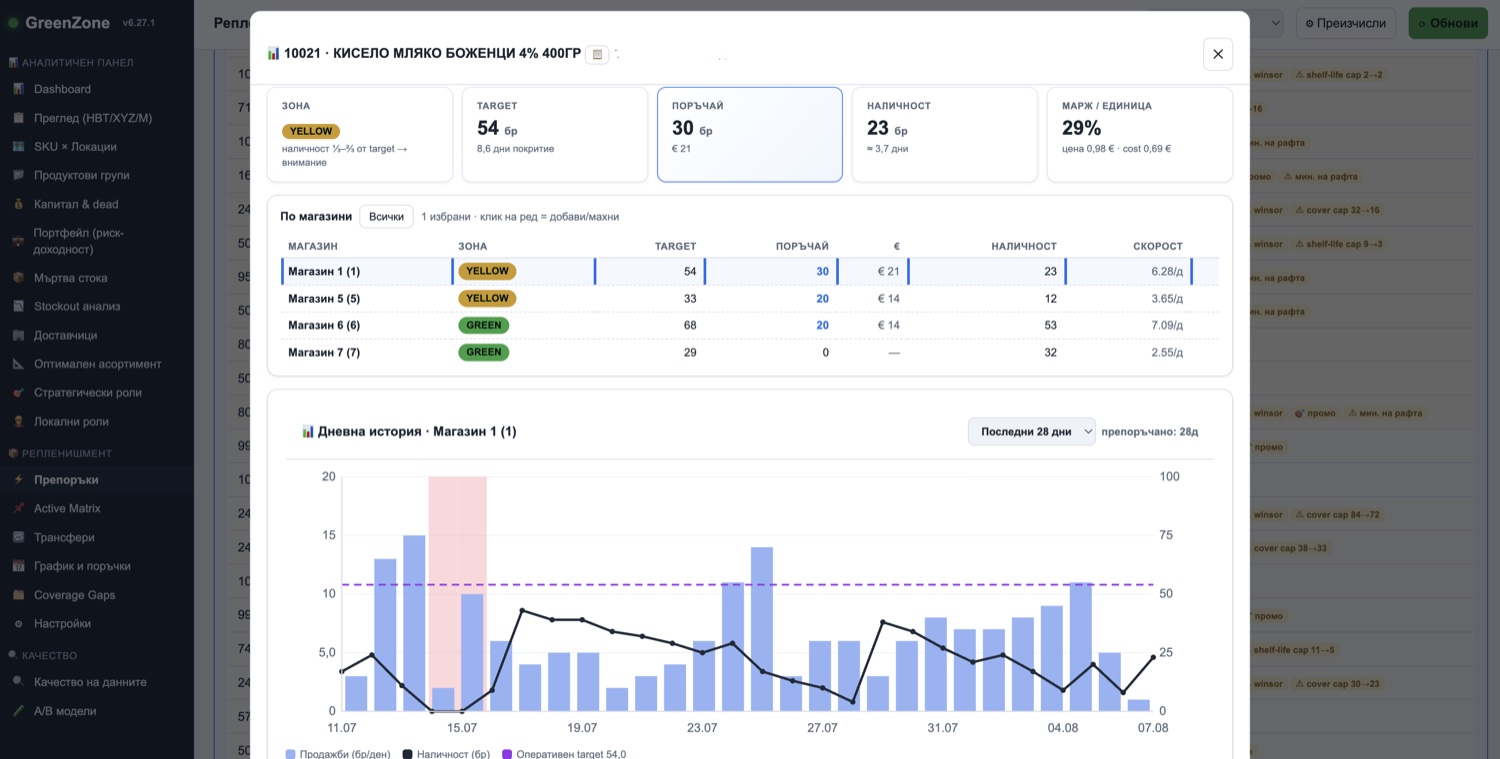
For distribution & retail — inventory replenishment
The software manages stock buffers at every point of the chain — central warehouse, regional warehouses, stores — based on actual consumption, changes in consumption trends, and the lead time and reliability of supply, rather than on forecasts.
- Dynamic buffer management — target stock levels adapt on their own
- Replenishment based on actual sales
- Clear priorities of what to ship today
- Automatic ordering — at one client it saved store managers 4 hours of work every day
- Stock transfers between locations
- Assortment optimisation
- Early warning for items at risk
Typical results: 3-15% more sales and at the same time 10-30% lower total inventory, with a significant increase in inventory turns.
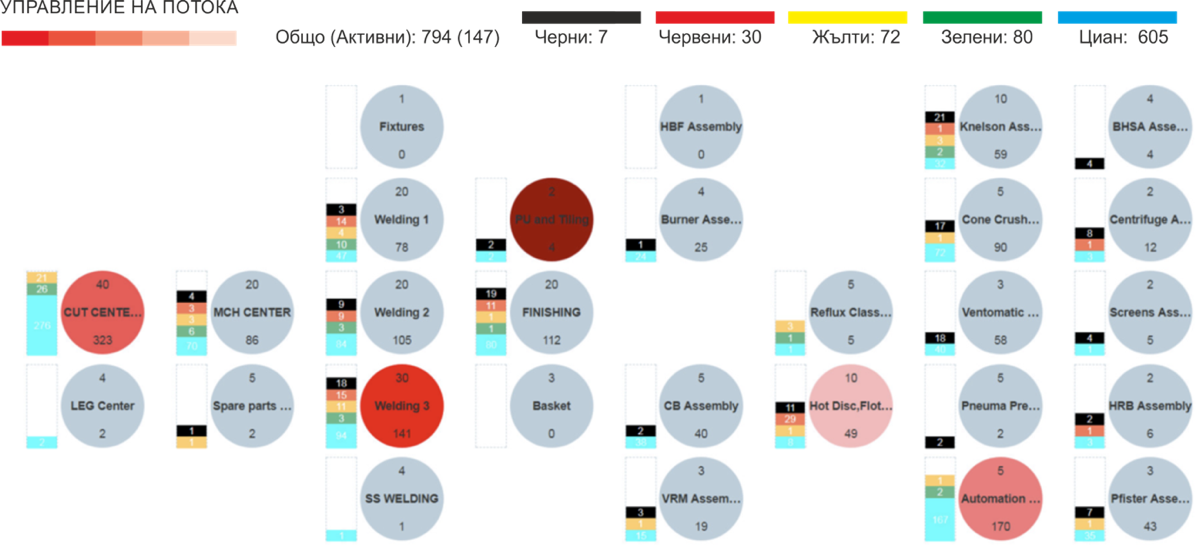
For manufacturing — priorities and flow
The software dynamically calculates the priority of every order and every task, and shows in real time which resources limit capacity and which orders are at risk.
- One clear set of priorities for the whole plant — no arguments about which order is urgent, and no re-prioritising by whoever in sales shouts loudest
- Bottlenecks visible in real time
- Control over the orders released into production
- Replenishment of raw materials and production of finished goods based on actual consumption
- Data on the most frequent causes of delay — the basis for continuous improvement
Typical results: increased production capacity (20-50%), shorter order lead times (20-50%) and significantly better on-time delivery (above 95%) — with a smaller investment in raw materials, work-in-process and finished goods.
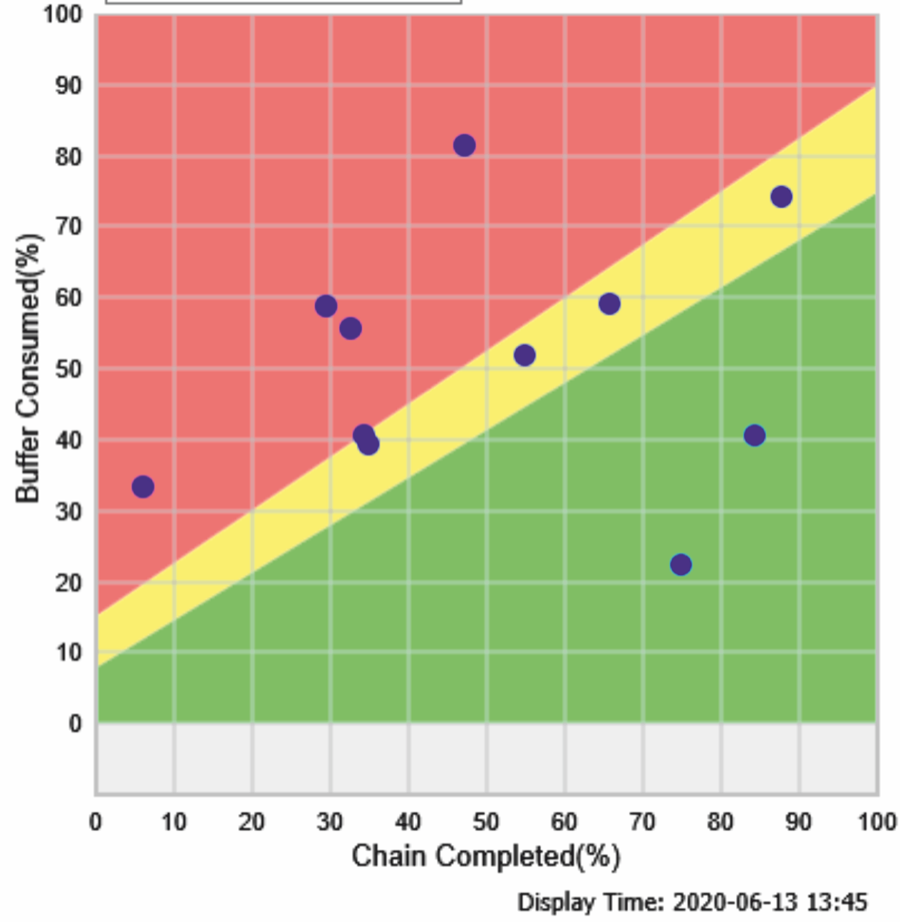
For project companies — CCPM
Software for Critical Chain Project Management: planning with buffers, tracking buffer consumption and clear priorities across all tasks and projects in the organisation.
- Critical chain planning with project and feeding buffers
- Fever chart — the status of each project at a glance
- Multi-project view: which projects are at risk and where to direct resources
- A clear task priority for the people doing the work
Typical results: 5-40% shorter project lead time, 5-40% more completed projects with the same resources, higher quality and fewer conflicts between teams.
Results at our clients
Figures from real implementations, not from a brochure.
Distribution company
+15%
more sales within one year
−8%
lower total inventory
The project is ongoing — a further reduction in inventory is expected.
Manufacturing company
−40%
shorter order lead times
−40%
smaller investment in raw materials, work-in-process and finished goods
Excellent on-time delivery.
Project company
+35-40%
more projects completed per year — with the same team
Here the lead time was deliberately not shortened — the agreements with customers did not require it, so the entire capacity gained went into more projects.
Significantly lower stress levels for the team.
How implementation works
It takes between 1 and 3 months, depending on the scope and the availability of data.
1. Analysis and choice of solution
We look at your specific situation — processes, constraints, existing systems — and select the right software from among our partner solutions and our own development.
2. Preparing the data
This is the stage that most often determines the timeline. The software works with data from your systems (ERP, warehouse software, production data) and its quality is decisive. We help you prepare it.
3. Configuration and training
We configure the buffers and rules to your specifics and train the team — not only how to work with the software, but why the logic is what it is.
4. Running and improving
The software becomes part of daily work, and the data it accumulates points to the next places to improve. Results are typically visible within months.
Would you like to see how it works?
Get in touch and we will discuss which solution fits your company.
Request a consultationThe first conversations and meetings carry no obligation and no charge — they are how we find out whether we can be useful to you at all.